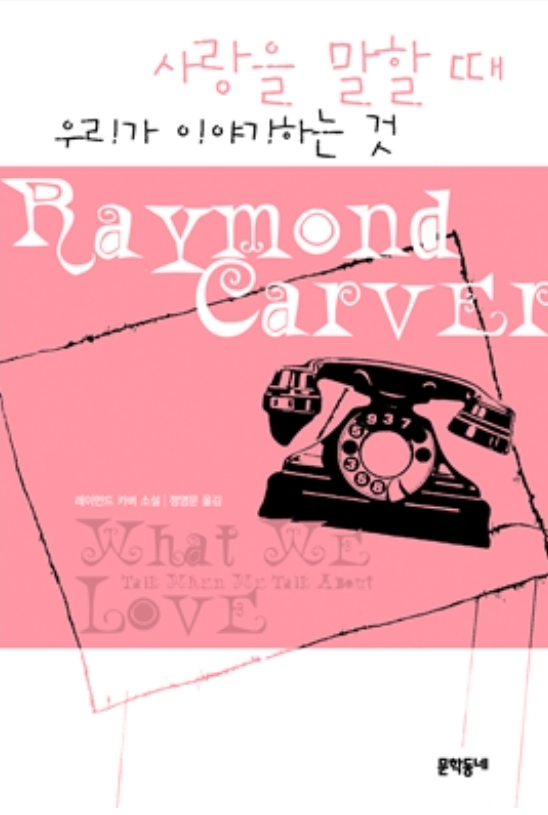
Here’s a heartfelt dive into Raymond Carver’s ‘What We Talk About When We Talk About Love,’ the master of realism in late 20th-century American literature. This collection of 17 mid-career short stories captures the delicate and dense lives of America’s working and middle class. Reading Raymond Carver’s work, you can’t help but be in awe of his technique. 🤯 I’ve never encountered a writer with such skill before, and I stand by that!
Most stories might have a multi-dimensional narrative, but when it comes to writing, authors often stick to linear methods. They freeze the scene, then describe it like taking a photo or drawing a picture, and the story unfolds through monologues or dialogues between two characters. But Carver is different. His scenes are ever-moving and shifting, with dialogues featuring three or four voices. Conversations don’t just flow in a straight path. Someone might change the topic, then another twist, and suddenly, the phone rings, or someone strokes their face. Raymond crafts every conceivable real-life situation in a cinematic way and expresses it perfectly in two-dimensional sentences. Talk about envy! 😍
It’s rare to see more than three people conversing in a typical novel, and the reason is simple: it’s tough to construct such scenes in writing. Many stories are linear simply because that method makes writing easier.
For these reasons, I believe some people might not connect with Raymond Carver’s stories. It’s because you need to visualize those complex situations constantly while reading. If there are four people talking, you need to keep track of who is saying what and continuously update the psychological states of all four. You have to manage the main topic without losing track and follow the jumping side topics. If you’re not careful, you might quickly lose track of what’s going on. It’s challenging. 😅
Technically perfect, but what about the message or story he wants to convey? To find out, you’d need to explore his novels, but Raymond didn’t leave any behind. There could be many reasons, but I personally think it’s nearly impossible to maintain the dazzling techniques he displayed in short stories over a longer piece. And he probably didn’t want to lower his standards just to write a novel. Unlike short stories, which can gain recognition through a series of sensory narratives, novels require a marathon-level plot to maintain a consistent message. You can’t master everything, after all.
Anyway, reading his stories felt like watching a movie without needing to add extra imagination, and I couldn’t help but be amazed. 🎬 While general readers might have mixed feelings, for professional writers, it’s either admiring his technical prowess or feeling a tinge of jealousy. Of course, there are those who might say, ‘You can write like that, but who will truly appreciate it?’ But hey…
Leave a Reply