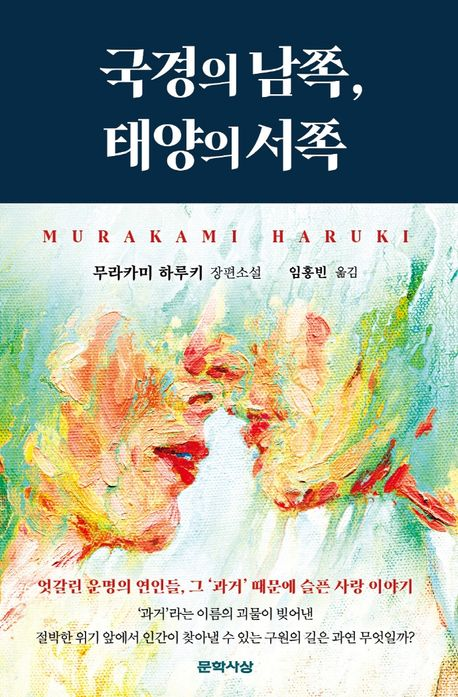
There’s this novel called ‘South of the Border, West of the Sun’ by Haruki. It’s one of his earlier works and, unlike his other surreal pieces, it’s classified as a romance novel along with ‘Norwegian Wood’. I recently found myself at the library, and since the story was a bit hazy in my memory, I borrowed it again. With nothing much to do over the weekend, I leisurely revisited this tale.
Personally, I admire Haruki from various angles, and this piece reminded me just how much I adore his early works. Sure, when you compare them to his more recent, polished styles and intricate compositions, there might be some shortcomings. But what they lack in finesse, they more than make up for in raw energy and vitality. They feel real, like something alive and writhing. It’s that feeling of ‘Yes, this is why I loved Haruki.’ His sentences and the power of his stories resonate deeply. 🌟
In this work, there’s a scene where the protagonist’s friend, Shimamoto, talks about ‘Hysteria Siberiana’. It’s a psychological phenomenon that describes the mental strain and distorted sense of reality experienced by people isolated in Siberia’s extreme conditions. Though it stems from environmental isolation, the author uses Shimamoto to expand it into a universal experience for humanity. And I felt a deep connection with that. 🌍
Even while living in familiar, mundane surroundings, there’s a moment when you realize it’s not as natural as it seems, and that’s when everything crumbles. It’s the fate of humans to confront this. From a metaphysical perspective, we can’t even fathom why we exist in this world, and from the moment we’re born, we’re slowly walking towards the inevitable end—death. Perhaps every step in life is a desperate attempt to momentarily forget that sorrowful conclusion. 💔
‘South of the Border’ symbolizes ‘life’, while ‘West of the Sun’ stands for ‘death’. Simultaneously, the protagonist’s wife Yukiko represents ‘life’, the ex-girlfriend Izumi signifies ‘awakening to reality’, and childhood friend Shimamoto is a metaphor for ‘death’. Initially, I couldn’t focus much, reading it as a mere romance novel. But from the moment Shimamoto reappeared, I was so engrossed that I didn’t realize who was around me until the very last page. Perhaps linking such profound meanings to a romance novel seems excessive, but I’m convinced Haruki conceived this novel from ‘Hysteria Siberiana’ and completed the entire storyline from there. 📚
Leave a Reply